Policy brief: FinTech & mobile banking in 2025 — what changed?
- Mobile banking is now the dominant way many households access their accounts in the US and EU.
- Regulators are moving from “watching” FinTech apps to directly supervising big digital wallets and payment platforms.
- Open banking and data-sharing rules are reshaping who controls account data and how apps plug into banks.
- For consumers, apps make money management more real-time — but also raise new risks around fraud, outages, and over-spending.
This article explains those shifts in plain language and ends with two checklists: one for FinTech teams, one for everyday users.
The Rise of FinTech Apps in 2025: How Mobile Banking Is Changing Money Management
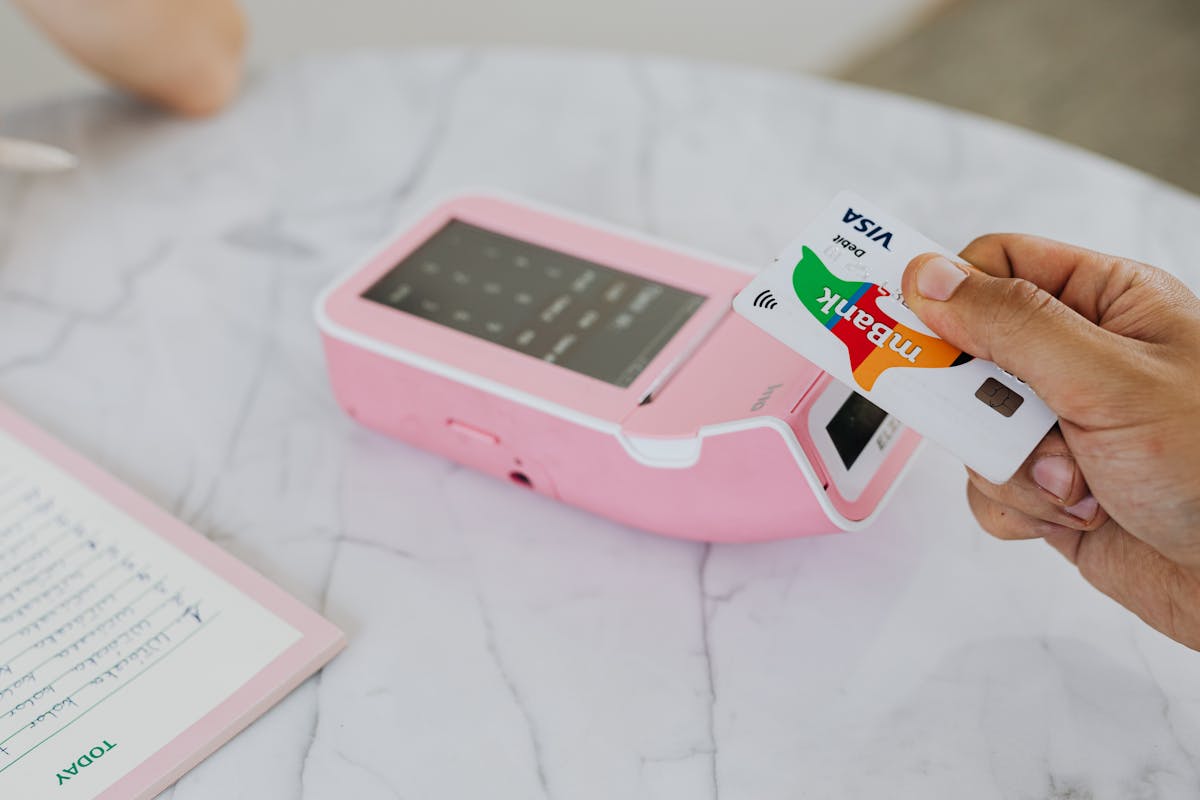
In less than a decade, checking your balance went from standing in line at a branch to tapping an icon on your phone while you wait for coffee. By 2025, mobile banking and FinTech apps aren’t “alternatives” to banks — for many people, they are banking. Budgets, savings goals, investments, and even side-hustle income all flow through a patchwork of apps.
But behind those smooth interfaces sits a complex web of regulation: open banking rules, digital operational resilience laws in the EU, and new US oversight for large payment apps. At the same time, AI-powered risk engines and behavioral nudges quietly shape what users see and how they spend, echoing themes we explored in Smart Money Infrastructure: How AI Manages Risk in Real Time and The Human Cost of Automated Rejection .
This piece takes a regulation-first look at the rise of FinTech apps: how adoption has exploded, which rules are quietly redrawing the map, and what all of this means for both product teams and ordinary users trying to handle their money more intelligently.
1. Mobile banking is no longer the “digital add-on” — it’s the default gateway
Ten years ago, mobile banking was often treated as a nice extra feature on top of “real” banking: branches, call centers, and paper statements. By 2025, that hierarchy has flipped. In the US, mobile has become the primary way many households access their accounts, while branch use and desktop online banking continue to decline.
FDIC household surveys already showed this trend before the pandemic: mobile access as a primary method almost doubled between 2017 and 2019, then continued climbing through 2021. European and global data point in the same direction, with digital and mobile channels dominating routine money management and cash use falling into single-digit percentages of total payments in some markets.
More recent 2025 digital banking snapshots report mobile banking usage rates above 70% for US adults and even higher penetration in several European markets. Among younger cohorts, it is unusual not to use at least one FinTech or mobile wallet app as part of everyday financial life.
From “your bank’s app” to a cluster of FinTech tools
One important nuance: “mobile banking” no longer means only your main bank’s official app. The typical user may now rely on:
- A primary bank or credit union app for deposits and bill pay.
- One or more digital wallets or payment apps for peer-to-peer transfers and online shopping.
- Separate FinTech apps for budgeting, savings challenges, micro-investing, or buy-now-pay-later (BNPL).
Money management has effectively become an ecosystem. That ecosystem is convenient, but it also blurs lines of responsibility: when something goes wrong, who exactly is on the hook — the bank, the wallet, the card network, or the app?
2. The regulatory backdrop: open banking, supervision of apps, and EU digital resilience rules
As FinTech apps moved from the margins to the center of daily banking, regulators shifted from observation to active rule-making. Three pillars matter most in 2025: open banking and data access, direct supervision of large payment apps, and digital operational resilience in Europe.
2.1 Open banking and data access rules
In the US, Section 1033 of the Dodd-Frank Act requires that consumers be able to access their financial data, subject to CFPB rulemaking. After years of consultation, the CFPB finalized an open banking rule in late 2024, with implementation timelines originally pointing to 2026 before litigation and political shifts complicated the path. The core idea remains: give consumers more control over who can access their account data and how.
In practice, this means many FinTech apps will connect via standardized APIs rather than fragile “screen scraping,” and data-sharing terms will move into a more clearly regulated space. That’s good news for security and clarity, but it also raises questions around who pays for access and how smaller apps compete with big incumbents.
2.2 Supervising large payment and wallet apps
Another turning point has been the recognition that some payment apps now move volumes comparable to mid-sized banks. The US Consumer Financial Protection Bureau (CFPB) finalized a rule in 2024 to supervise the largest non-bank payment and digital wallet companies, treating them more like banks for compliance and examination purposes when they cross transaction-volume thresholds.
This means major wallets and payment apps need bank-level playbooks for consumer protection, complaints handling, fraud mitigation, and disclosures. The line between “tech company” and “financial institution” is much thinner when supervisors can knock on the door and review policies, transaction data, and risk controls.
2.3 Europe’s Digital Operational Resilience Act (DORA)
In the EU, the Digital Operational Resilience Act (DORA) establishes a comprehensive framework for digital resilience across banks, payment institutions, and other financial entities. It requires robust ICT risk management, incident reporting, testing, and oversight of critical third-party providers that deliver cloud and technology services to financial firms.
For FinTech apps that sit inside the regulated perimeter or partner with supervised banks, DORA means higher expectations around uptime, cybersecurity, data integrity, and governance of technology vendors. EBA guidance on ICT and security risk management is being updated to align with DORA, pushing institutions and their tech partners toward a more standardized approach to digital risk.
3. How mobile banking and FinTech apps are reshaping everyday money management
Regulations operate in the background, but the visible change is behavioral. Users open their banking or finance apps multiple times per day. Notifications nudge them to save, invest, or repay — or to spend, upgrade, and subscribe. This is where mobile design and behavioral finance intersect.
The same psychological levers we discussed in How Behavioral Finance Is Transforming Borrower Evaluation now appear in retail money apps: progress bars, streaks, “round-ups,” and gamified rewards that make financial decisions feel like a game rather than a spreadsheet.
3.1 From static balances to live financial dashboards
Traditional online banking often showed yesterday’s balance and a transaction list. FinTech apps in 2025 act more like dashboards:
- Real-time transaction feeds across multiple bank and card accounts.
- Automatic categorization of spending into budgets (food, rent, transport, subscriptions).
- Forecasts of cash flow for the rest of the month based on bills and recurring charges.
- Micro-savings rules that move small amounts into savings or investment whenever you spend.
For many users, this makes financial awareness more constant. The trade-off: it can also normalize always being “plugged in” to your finances, which can increase anxiety or encourage reactive decisions when markets or personal circumstances shift.
3.2 Embedded credit and BNPL at checkout
Another quiet revolution is how credit and BNPL options have been embedded directly into shopping experiences. Instead of visiting a bank to discuss a loan, many users see a BNPL or card offer at checkout — often framed as a frictionless way to “manage cash flow” rather than as debt.
For regulators, the concern is that app-based credit can feel like part of the UX rather than a serious financial commitment. This is exactly why new rules in multiple jurisdictions are trying to bring BNPL and embedded credit closer to traditional lending frameworks, with clearer disclosures and affordability checks.
4. New convenience, new risks: outages, fraud, and opaque algorithms
When daily money management moves into apps, the risks follow. Some are familiar — fraud, unauthorized transactions, hidden fees. Others are newer: outages that lock users out of accounts, AI-driven decisions that users cannot easily contest, and complex data-sharing chains between banks, wallets, and third-party providers.
4.1 Fraud and dispute headaches
Faster, app-based payments are a double-edged sword. Instant transfers are great when everything goes right, but difficult to reverse when something goes wrong. Several high-profile cases have highlighted how consumers can be left in the middle when banks and payment apps disagree about who is responsible for a fraudulent transfer or scam.
This is why regulators are pushing for clearer allocation of liability and simpler dispute processes for users. Supervisory focus on fraud handling is increasing, especially for high-volume payment apps that operate at systemic scale.
4.2 Algorithmic decisions and digital denial
Lending and risk decisions are increasingly made by algorithms that ingest account histories, transaction streams, and behavioral signals. As we explored in The Human Cost of Automated Rejection , automated decisions can amplify bias or produce outcomes that feel arbitrary to the user, especially when explanations are vague.
For FinTech apps, the challenge is to comply with fair lending, anti-discrimination, and explainability requirements while still innovating quickly. Regulators increasingly expect not just a model, but a documented governance trail: data sources, validation, monitoring, and a human escalation path when users contest outcomes.
5. Compliance lens: a 10-point checklist for FinTech and mobile banking product teams
For product, compliance, and engineering teams building mobile banking or FinTech apps, 2025 is no longer a “moves fast and breaks things” environment. Supervisors, investors, and even enterprise customers want to see concrete evidence that the app is aligned with emerging rules.
Use this checklist as a conversation starter between product, legal, and engineering:
- Data access governance: Map how you connect to banks and partners (APIs, aggregators, direct connections) and ensure your approach fits open banking and data-sharing rules in your markets.
- Clear, layered disclosures: Present key fees, limits, and risks in short, plain language before users commit — not buried in a 40-page terms PDF.
- Complaint handling playbook: Implement a formal pipeline for user complaints, with timelines, escalation rules, and root-cause analysis.
- Fraud and dispute procedures: Define who pays when fraud occurs, how users can report it, and how quickly investigations proceed.
- Digital resilience & incident response: Align uptime, backup, and incident-response processes with frameworks like DORA in the EU and relevant guidance in other regions.
- Third-party risk management: Maintain a register of critical vendors (cloud, data providers, analytics tools) and assess them periodically.
- Model governance: Document how risk and recommendation models are built, tested, monitored, and updated — including fairness checks.
- Dark-pattern avoidance: Review flows for manipulative designs (forced opt-ins, obscured exit paths) that may attract regulatory scrutiny.
- Financial inclusion impact: Track how your app impacts different user groups, including those with thin credit files or lower digital literacy.
- Regulatory horizon scanning: Assign someone to monitor changes in CFPB, FDIC, EU, and local guidance on digital banking, payments, and data.
None of these items is optional for long. As mobile apps become the primary interface for banking, authorities treat them as critical infrastructure — not just shiny front-ends. That’s the same logic we see in AI-driven infrastructure, explored in Smart Money Infrastructure: How AI Manages Risk in Real Time .
6. Practical checklist: choosing and using FinTech apps safely as a consumer
Regulations and checklists are useful, but individual users still make the final decision about which apps to trust. Here is a practical, non-technical checklist you can use when evaluating a new mobile banking or FinTech app.
6.1 Before you download or sign up
- Check who is behind the app: Is it a bank, a licensed institution, or a start-up partnering with a regulated entity?
- Search for complaints: Look up the company on official complaint databases, consumer regulators, or trusted review sites.
- Confirm how your money is held: Are funds in insured bank accounts, safeguarded at a partner institution, or held off-balance-sheet?
- Read at least one page of terms: Focus on fees, dispute rules, and how to close your account.
6.2 While using the app
- Turn on multi-factor authentication and device-level security (PIN, biometrics).
- Review notifications: understand what alerts you receive for logins, payments, and changes.
- Export data or statements periodically so you have a record outside the app.
- Watch for nudges that push you toward more credit or higher risk than you intended.
6.3 If something goes wrong
- Document what happened immediately (screenshots, timestamps, messages).
- Contact the app’s support and your bank if account credentials or cards are involved.
- Escalate through formal complaint channels if responses are slow or unclear.
- Consider reporting serious issues to consumer protection authorities or financial regulators in your country.
7. FAQ: FinTech apps, mobile banking, and 2025 regulation
Are FinTech apps as safe as traditional banks?
Safety depends on the specific app, its licensing, and how it holds your money. Some apps are simply new front-ends on top of insured bank accounts; others act as intermediaries or wallets. Regulators are closing gaps, but you should always verify who ultimately safeguards your funds and under which regime.
Can FinTech apps help me manage money better, not just faster?
Yes — many apps offer strong tools for budgeting, cash-flow projections, and automated saving. The key is to use those features intentionally. Real-time awareness can prevent overspending, but constant nudges and instant credit can also encourage it if you follow every prompt.
What should FinTech founders prioritize in 2025?
Beyond UX and growth metrics, founders need a mature approach to compliance and digital resilience. That means early investment in governance, risk, and compliance functions — and designing features with future regulations in mind rather than treating them as a late-stage patch.
Disclaimer: This article is for general informational purposes only and does not constitute legal, regulatory, or financial advice. Organizations should consult qualified counsel and compliance professionals for guidance on specific obligations in their jurisdictions.
Sources & further reading
- FDIC – National Survey of Unbanked and Underbanked Households (mobile banking usage trends).
- World Bank – Global Findex Database (global account ownership and digital finance usage).
- CFPB – Rules and issue spotlights on digital payment apps, open banking, and mobile payments.
- European Banking Authority (EBA) – Guidelines on ICT and security risk management and DORA materials.
- OECD and other international bodies – analyses on digitalisation, FinTech, and consumer protection.