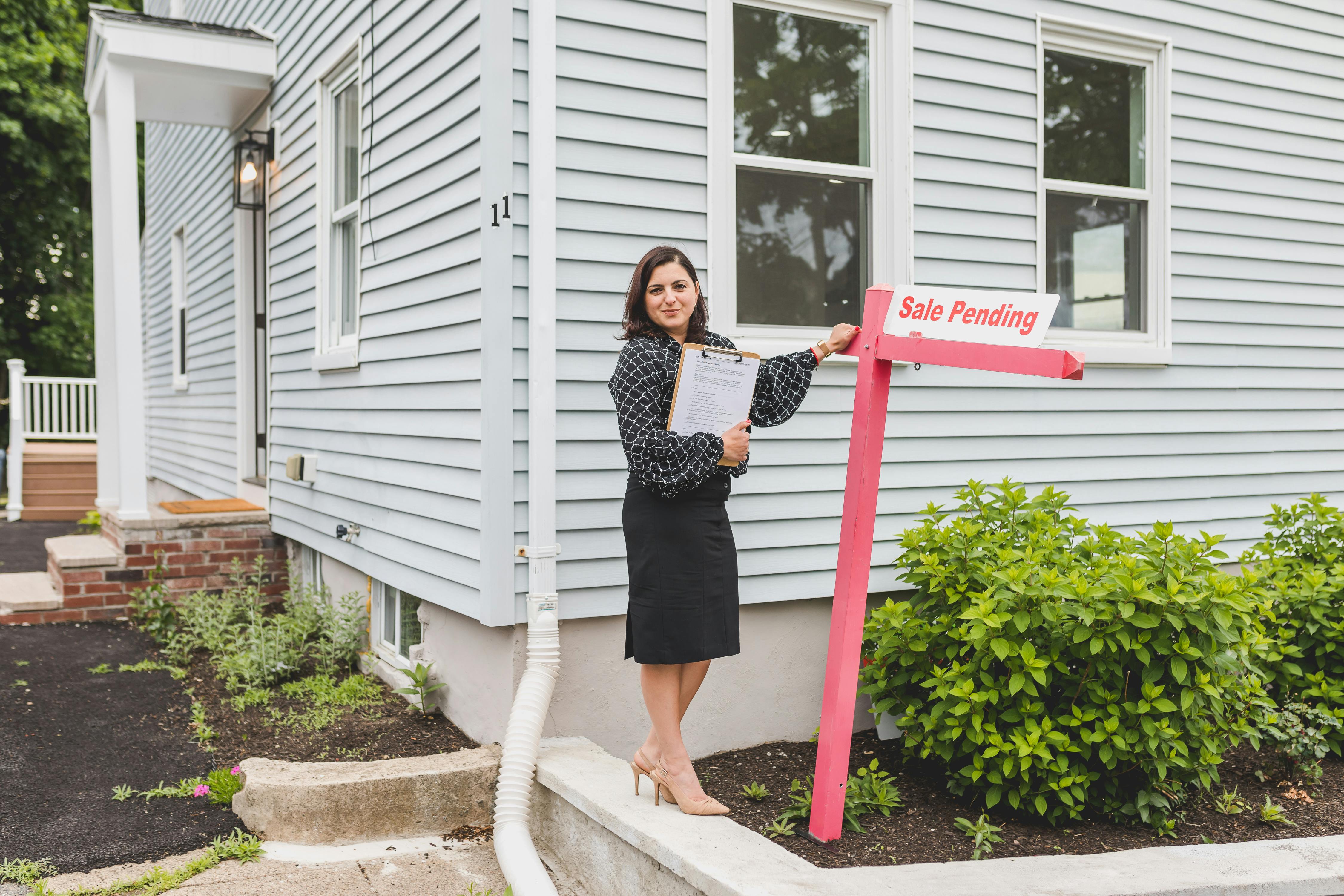
For nearly a century, buying a home in America followed a painful, predictable script: You gather stacks of W-2s, hunt for bank statements from three years ago, fax (yes, fax) documents to a loan officer, and then wait 45 days in silence, hoping a human underwriter doesn't find a $50 deposit they don't understand.
In 2025, that script has been shredded. The mortgage industry has undergone its most violent disruption since the 2008 financial crisis. This time, however, the disruptor isn't a subprime bond; it is Artificial Intelligence.
We have moved from "Asset-Based Underwriting" (looking at what you have) to "Behavioral Cash-Flow Underwriting" (looking at how you live). Algorithms now ingest thousands of data points—from your Venmo history to your rental payments—to build a risk profile in milliseconds that is arguably more accurate, and paradoxically more human, than any FICO score ever was.
This guide is not just about faster loans. It is a deep dive into the "Black Box" of Modern Lending. We will explore how the machines think, why they are approving borrowers who were previously "invisible," and how you can optimize your financial digital footprint to unlock the best rates in history.
1. The Great Shift: From "Credit Score" to "Credit DNA"
To understand the power of AI in 2025, we must first acknowledge the failure of the legacy system. Traditional underwriting was binary. You either had a 740 FICO score, or you didn't. It was a blunt instrument in a nuanced world.
AI underwriting is quantum. It looks at the velocity and stability of your money. It asks questions a FICO score cannot answer: "Does this borrower panic-spend when their balance gets low?" or "Do they have a 5-year streak of paying rent on the 1st of the month?"
Legacy vs. AI: The Tale of Two Loans
Here is exactly how the landscape has changed.
| Feature | Legacy Underwriting (The Old Way) | AI Underwriting (The 2025 Way) |
|---|---|---|
| Primary Data | FICO Score, W-2s, Tax Returns | Bank APIs, Cash Flow, Payroll Data, Rent |
| Speed | 30-45 Days | 24-48 Hours (Instant Pre-Approval) |
| Risk Logic | Retrospective (What did you do 5 years ago?) | Predictive (Can you afford this today?) |
| Self-Employed | Penalized (Tax write-offs lower income) | Rewarded (Real cash flow analysis) |
| Bias Risk | Human Bias (Loan Officer discretion) | Algorithmic Bias (Data training sets) |
Key Takeaway: The new system favors transparency. The more data you allow the AI to see (via Open Banking APIs), the more "credit" it can give you for positive behaviors that FICO ignores.
2. Under the Hood: How the Machine "Reads" You
When you click "Connect Bank Account" on a site like Better.com or Rocket Mortgage, you aren't just uploading a PDF. You are triggering a sophisticated pipeline of three technologies. Understanding this stack helps you prepare your application.
Layer 1: Optical Character Recognition (OCR) 2.0
Old OCR just turned images into text. The 2025 version uses Computer Vision. It doesn't just read "Deposit $5,000"; it recognizes that the document is a Chase Bank statement, identifies the font to check for forgery, and flags if the document borders look manipulated (a common fraud tactic).
Layer 2: Transaction Categorization (NLP)
This is where Natural Language Processing (NLP) comes in. The AI scans your 2,000 yearly transactions.
- It sees "Starbucks" and labels it: Discretionary Spending.
- It sees "Coinbase" and labels it: Volatile Asset Investment.
- It sees "DraftKings" and labels it: Risk Seeking Behavior.
Warning: If you are planning to apply for a mortgage, clean up your transaction descriptions. AI models can flag "Gambling" or "NSF Fees" as high-risk behavioral markers.
Layer 3: The Risk Engine (Predictive Modeling)
Finally, the data is fed into a Gradient Boosting Model (like XGBoost). This model doesn't just check if you qualify; it simulates 10,000 future scenarios.
"If interest rates rise by 2% and this borrower loses 10% of their income, what is the probability of default?"
If the probability is below the bank's threshold (e.g., 0.5%), you are approved instantly.
3. The "Thin-File" Revolution: Inclusion by Code
The greatest moral argument for AI underwriting is its ability to serve the "Credit Invisible." In the US alone, 45 million people have no FICO score. These aren't deadbeats; they are young people, immigrants, and cash-preference users.
In 2025, lenders like SoFi and Blend use "Alternative Data" to underwrite these loans.
The Gig Economy Factor
Consider an Uber driver or a Freelance Designer.
- Old World: The bank looks at their tax return. Because they wrote off their car and home office, their "Net Income" looks low. Denied.
- AI World: The algorithm connects to their Uber Driver API. It sees consistent weekly deposits for 24 months. It sees their "Gross Revenue" is healthy. It ignores the tax write-offs because it understands cash flow. Approved.
This is not lowering standards; it is correcting standards. It recognizes that in a gig economy, "Taxable Income" is a poor proxy for "Ability to Repay."
(Continued in Part 2: We will cover the specific data points that boost your approval, the risks of algorithmic bias, and the 2025 Borrower Checklist.)
4. Optimizing for the Algorithm: How to Groom Your Data
In the legacy system, you "fixed" your credit by paying off a card. In the AI system, you must "groom" your entire financial digital footprint. The algorithm is constantly watching your behavior patterns. To get the lowest rate, you need to look like the model's ideal borrower.
We call this "Data Hygiene." Here are the specific signals the 2025 risk models reward and punish.
Positive Signal: "Liquidity Consistency"
Old underwriters looked at your "Current Balance." AI looks at your "Average Daily Balance" over 12 months.
- The Strategy: Do not just dump money into your account the day before applying. The AI sees that as an anomaly (and potentially a loan from a friend). Instead, maintain a "buffer floor"—never let your checking account drop below $1,000 for 6 months. This triggers a "High Stability" flag.
Negative Signal: "Micro-Volatility"
This is a new metric. Models hate "financial stress signals" that happen between paychecks.
- The Trap: Relying on overdraft protection or Buy Now, Pay Later (BNPL) for groceries. Even if you pay it back, the usage suggests you are living on the edge.
- The Fix: Eliminate all BNPL usage 90 days before applying. Treat your primary bank account like a showroom; keep it clean of distress signals.
The "Unexplained Deposit" Flag
Legacy underwriters asked for a letter of explanation for large deposits. AI simply flags them as "High Risk/Money Laundering" and may silently reject the loan or require manual review (which adds weeks).
Pro Tip: If you are receiving a gift from parents for a down payment, engage the "Gift Letter" protocol within the lender's portal before the money hits your account. Labeling the transaction preemptively prevents the "Risk Flag" from ever triggering.
5. The Black Box Problem: Algorithmic Bias
While AI removes the human loan officer who might judge you by your last name, it introduces a more insidious danger: Digital Redlining.
AI models are trained on historical data. Historical data in the US housing market is deeply biased. If an algorithm learns that "Borrowers in Zip Code X usually default," it will penalize everyone in Zip Code X, regardless of their individual strength.
The Regulatory Response (CFPB 1033)
In response, the Consumer Financial Protection Bureau (CFPB) has enacted strict "Explainability" rules. In 2025, a lender cannot just say "Computer says no." They must provide:
- Principal Reason Codes: Specifically which variables lowered your score (e.g., "High frequency of non-sufficient funds").
- Adverse Action Notice: A detailed breakdown of the data used.
Borrower Rights: If you are rejected by an AI, you have the right to appeal for a "Human Review." However, statistics show that human reviewers overturn AI rejections less than 15% of the time, as they tend to trust the machine's risk assessment.
6. Case Study: The "Hybrid" Approval
Let's look at a real-world scenario of how AI saved a deal that legacy underwriting would have killed.
The Borrower: "Alex," a 29-year-old software engineer.
The Profile:
- FICO: 680 (Due to a missed student loan payment 4 years ago).
- Employment: Changed jobs 3 times in 2 years (Job Hopper).
- Assets: Significant Crypto holdings, low cash.
The Legacy Outcome: DENIED
A traditional bank sees a 680 score (below the 720 prime tier) and "unstable employment." The Crypto assets are ignored because they are "volatile." The loan is rejected.
The AI Outcome: APPROVED
The AI model (e.g., Blend or Roostify) dug deeper:
- Income Velocity: It noted that every job change resulted in a 20% salary increase. It flagged this not as "instability," but as "Career Progression."
- Cash Flow Capacity: It analyzed rent payments of $3,500/month paid perfectly for 3 years. The new mortgage is $3,200. The AI calculates a "Payment Shock" of roughly 0% (actually negative).
- Asset Liquidity: It connected to Coinbase API, verified the portfolio, and applied a "Haircut" (a risk reduction, valuing the crypto at 60%). Even at 60%, there were enough reserves for 12 months of payments.
Result: Alex was approved at a Prime Rate, saving 0.75% in interest—roughly $400/month.
7. Future Outlook: 2026-2030
We are only in the first inning. The next phase of AI mortgage tech involves Blockchain Settlement.
Currently, even with AI approval, "Closing" takes days because of Title Insurance and recording deeds. By 2027, we expect "Smart Contracts" on the blockchain to allow for Instant Closing.
Imagine viewing a house on Saturday, getting AI-approved on Sunday, and transferring the deed/funds instantly on Monday via a secure ledger. The "30-Day Escrow" will become a relic of the past.
8. The 2025 Borrower's Action Plan
If you are planning to buy a home this year, stop thinking like a loan applicant and start thinking like a data administrator.
Phase 1: The Audit (90 Days Out)
- ✅ Connect All Accounts: Ensure your lender's app is connected to your checking, savings, and investment accounts. The more data they see, the better.
- ✅ Stop the Shuffle: Stop moving money between accounts. It confuses the "Source of Funds" algorithm.
- ✅ Audit Descriptions: Review your bank statements. Are there transactions that look suspicious? (e.g., huge Venmo payments). Annotate them.
Phase 2: The Grooming (60 Days Out)
- ✅ Build the Floor: Raise your average daily balance.
- ✅ Clean the Payroll: Ensure your direct deposit name matches your loan application name exactly. Name mismatches cause manual review delays.
Phase 3: The Application (Day 0)
- ✅ Upload Raw PDFs: Do not scan documents. Upload the original digital PDF downloaded from your bank. Scans introduce OCR errors.
- ✅ Use the API: Always choose "Link Bank Account" instead of "Upload Statements" if given the choice. API data is trusted more by the model (Gold Standard).
Final Thoughts: Don't Fear the Machine
The transition to AI underwriting is intimidating. It feels invasive. But for the vast majority of borrowers—especially those who work hard but don't fit the 1950s mold of a "company man"—it is a massive upgrade.
The machine is fair, fast, and rational. It rewards good behavior, regardless of who you are or where you come from. Your job is simply to present the data in a language it understands.
Ready to prepare your finances for the AI era? Deep dive into our guide on Smart Money Infrastructure to ensure your wealth is ready for the digital scrutinizer.