I'm going to say something that might sting: if you haven't shopped your car insurance in the last twelve months, you're almost certainly leaving money on the table. Not $50. Not $100. We're talking potentially hundreds — even thousands — of dollars a year, bleeding out of your bank account because of inertia. And in 2026, where the insurance landscape looks nothing like it did even two years ago, that inertia is more expensive than it's ever been.
Here's the thesis of this piece, stated plainly: the car insurance market in 2026 is undergoing a structural transformation driven by AI-powered pricing, telematics adoption, regulatory upheaval around credit scoring, the EV insurance gap, and post-inflationary margin recalibrations by carriers who spent 2022–2024 aggressively raising premiums. If you understand these forces — and I mean really understand them — you can position yourself to exploit the gaps between what carriers charge and what they should charge for your specific risk profile. That's not a coupon-clipping exercise. That's genuine financial alpha on a recurring expense that most Americans treat as a fixed cost.
So let's get into it.
The 2026 Rate Environment: What the Numbers Actually Tell You
First, some context. The average annual cost of full-coverage car insurance in the United States sits at approximately $2,144 as of the end of 2025, following a 6% national decline after premiums surged 46% between 2022 and 2024. That two-year spike — driven by pandemic-era risky driving behavior, runaway repair costs, supply chain disruptions, and nuclear jury verdicts — was the most aggressive repricing event in the personal auto line in decades. Insurers were hemorrhaging money, and they corrected hard.
Now here's where it gets interesting for 2026. Insurify projects that the national average will tick up roughly 1% to about $2,158 by year's end. The Zebra pegs the typical American driver at $2,256 in annual premiums. These numbers sound stabilized — even benign — until you realize they mask enormous state-level divergence that creates both risk and opportunity for you as a consumer.
Thirty-five states are projected to see rate increases in 2026. Fifteen will see declines. The spread is staggering. Vermont drivers might see decreases of 6–13%. Oregon and Maryland drivers could face increases of 14–21%. Washington, D.C., residents are paying an average of $4,017 annually — nearly double the national average — after an 18% surge in 2025. If you're in the Bronx, you're looking at $6,270 per year. If you're in Wyoming, it's $1,052.
The takeaway? National averages are almost meaningless for your personal financial planning. Your state, your ZIP code, your carrier, and your specific risk profile interact to produce a number that can vary by 300% or more for the same driver. That variance is where the savings live.
Why Carriers Are Cutting Rates — and Why You Should Be Skeptical
After two years of aggressive rate hikes, many of the largest insurers have rebuilt their balance sheets and are now sitting on healthy margins. Five of the ten largest car insurance companies in the U.S. are expected to lower rates in 2026. State Farm, the country's largest auto insurer, could reduce rates by around 4%. Allstate, meanwhile, has the largest projected increase among major carriers — but it's a modest 1.98%.
Here's what's really happening: carriers competed ruthlessly on the way up, and now they're competing on the way down. Insurers' margins are, by most accounts, healthy enough to absorb near-term cost pressures — including tariff-driven repair cost increases — without immediately passing them to consumers. That creates a window. A brief, possibly fleeting window where carriers are using competitive pricing to attract and retain customers.
But — and I want you to hear this clearly — midsize and regional carriers are a different story entirely. NJM customers may see rate hikes of over 21%. Erie is projected at nearly 8%. Plymouth Rock around 6%. If you're insured with a smaller, regional carrier, don't assume the headline "rates are stabilizing" narrative applies to your renewal notice.

The Comparison Shopping Playbook: How to Actually Do This Right
I talk to a lot of smart people — people who wouldn't dream of buying a stock without reading the 10-K — who have no idea how to properly compare car insurance quotes. They get one quote from GEICO, one from Progressive, see a $30/month difference, and call it a day. That's not comparison shopping. That's a coin flip.
Here's the methodology that actually works.
Step 1: Establish Your Coverage Baseline
Before you touch a single comparison site, review your current policy. What are your liability limits? What are your comprehensive and collision deductibles? Do you carry uninsured/underinsured motorist coverage? Medical payments or PIP? Rental car reimbursement? You need to know exactly what you have so you can quote identical coverage across carriers. Comparing a $100,000/$300,000 liability policy from one carrier against a $50,000/$100,000 policy from another tells you nothing useful.
A common mistake: people chase the cheapest number without realizing they've gutted their coverage. The cheapest car insurance is rarely the best car insurance. If you cause a multi-car accident and your liability limits are at state minimums, you're personally on the hook for everything above those limits. In 2026, with medical costs and vehicle values where they are, state minimums are dangerously inadequate in most states.
Step 2: Use Multiple Quote Channels
You have three primary channels, and you should use at least two of them. First, comparison aggregators like The Zebra, Insurify, and Compare.com, which pull quotes from dozens of carriers simultaneously. These are your broadest net. Second, independent insurance agents who represent multiple carriers and can access regional or niche insurers that don't appear on aggregator platforms. Third, direct quotes from specific carriers — particularly captive-agent companies like State Farm or Allstate — that don't always participate in aggregator marketplaces.
A critical warning about comparison sites: not all of them are created equal. Some — particularly lead-generation sites like ValuePenguin and QuoteWizard — will sell your personal information to agents and carriers, resulting in a barrage of phone calls and spam. Insurify and The Zebra have better reputations for providing actual quotes without flooding your inbox. Do your due diligence on which platforms respect your data before you hand over your driver's license number.
Step 3: Get at Least Five Quotes — With Identical Parameters
Five is the minimum. The data consistently shows that the price difference between the cheapest and most expensive insurer for the same driver profile can be $500 or more per month — a spread that can exceed 400% for the same level of coverage. NerdWallet's February 2026 analysis found that in more than half of U.S. ZIP codes, the cheapest company for full-coverage auto insurance doesn't even offer the lowest rate for minimum coverage. That means your optimal carrier might change depending on what coverage you're buying.
Make sure every quote uses the same coverage limits, deductibles, and driver information. Even small discrepancies — a different deductible tier, a missing driver on the policy — will corrupt your comparison.
Step 4: Factor in Discounts You Haven't Claimed
This is where most people leave the most money behind. Carriers offer a dizzying array of discounts that many policyholders never claim because they don't ask or don't know they exist. The major categories include multi-policy bundles (5–25% savings for combining auto and home), multi-car discounts (8–25%), good driver discounts (up to 26%), paid-in-full discounts (6–14% for paying your annual premium upfront), and good student discounts for households with young drivers.
Here's a subtlety that most guides miss: the discount structure varies dramatically by carrier. An insurer with a higher base rate but more generous discounts might end up cheaper than a low-base-rate carrier with minimal discount options. You have to run the full calculation, not just compare sticker prices.
The Telematics Revolution: Your Driving Data Is Now Currency
If there's a single trend that will reshape car insurance economics more than any other in 2026 and beyond, it's telematics — also known as usage-based insurance (UBI). And most drivers are still sleeping on it.
Telematics programs use smartphone apps or plug-in devices to monitor your actual driving behavior — speed, braking patterns, mileage, time of day, phone usage — and adjust your premium based on what the data reveals. The concept has been around for years, but 2026 is the year it's hitting an inflection point. Survey data shows that 82% of policyholders now view telematics apps positively, up significantly from just a few years ago. Sixty percent say they're open to switching to usage-based insurance, and 52% would share driving scores for personalized pricing.
Why the shift? Simple economics. When your premiums have gone up 46% in two years, the privacy trade-off starts looking a lot more reasonable. As The Zebra's David Seider put it, "When things feel expensive, people are more willing to try new things. Telematics or usage-based insurance used to feel a bit too 'big brother' for most folks. Perhaps its time in the mainstream is coming."
The Best Telematics Programs in 2026
Not all telematics programs are equal, and the differences matter enormously. Nationwide's SmartRide offers up to 40% off your premium — the highest advertised discount from any major provider — and crucially, Nationwide will never use the data it collects to increase your rate. Progressive's Snapshot provides an automatic discount just for enrolling, with personalized rates after the first policy period; drivers who save average $322 annually. USAA's SafePilot, available to military families, offers competitive discounts without rate penalties.
On the other side of the spectrum, Liberty Mutual's RightTrack and Progressive's Snapshot can increase your rates for poor driving habits. This is a critical distinction. If you're a confident, safe driver, programs that only discount (never surcharge) represent pure upside. If your driving habits are less consistent, you need to read the fine print carefully before enrolling.
AutoInsurance.com's survey of over 1,200 U.S. drivers found that two in three telematics users noticed a decrease in monthly premiums, with the median savings at $27 per month — or $324 annually. That's real money. But the savings aren't uniformly distributed. Younger drivers and those with multiple drivers on a policy tend to save more. Drivers under 45 saw median savings of $145, while those 70 and older saved $93.
Pay-Per-Mile: The Remote Worker's Secret Weapon
If you work from home or drive fewer than average miles, pay-per-mile insurance deserves special attention. Companies like Metromile (now part of Lemonade) and Mile Auto charge a low base rate plus a per-mile fee, which can dramatically reduce premiums for low-mileage drivers. In a post-pandemic economy where remote and hybrid work remain prevalent, this model offers substantial savings that traditional policies simply can't match.

The AI Pricing Revolution: What Carriers Know That You Don't
Traditional insurance underwriting relies on a handful of blunt demographic proxies — age, gender, ZIP code, credit score, claims history. AI-driven underwriting, which is rapidly becoming the industry standard in 2026, evaluates hundreds of data points per driver. Vehicle maintenance records, location-based risk (accident and theft rates by neighborhood), environmental data like weather and traffic patterns, real-time telematics feeds — all of it gets ingested by machine learning models that produce increasingly granular risk assessments.
This has a profound implication for you as a consumer. Carriers now have much better tools to separate "best-in-class" accounts from average risks. The result is a wider gap in pricing between customers who actively manage their risk profile and those who don't. If you're a safe driver with good credit, a modern vehicle with advanced safety features, and you're willing to share telematics data, you can access pricing that would have been unavailable five years ago. If you're a passive consumer who auto-renews every six months without looking, you're subsidizing everyone else.
AI is also transforming the claims process. Some carriers now approve claims automatically within minutes using computer vision to assess damage from photos. This matters because claims handling efficiency directly impacts your premium — carriers with lower claims processing costs can offer more competitive rates. When you're comparing quotes, don't just look at the premium number. Look at claims satisfaction scores and the carrier's technology stack. A $50/month savings means nothing if the carrier takes six weeks and three adjusters to settle a fender bender.
The Credit Score Battleground: A Regulatory Earthquake in Progress
Here's something that should make you angry, or at least deeply uncomfortable: in most U.S. states, your credit score — which has absolutely nothing to do with how you drive — is one of the single largest factors determining your car insurance premium. Nationally, drivers with poor credit pay roughly 105% more than those with excellent credit. In Iowa, that penalty is 140%. In Missouri, drivers with very poor credit scores pay an average of $6,254 per year, compared to $1,673 for those with exceptional credit. That's a $4,581 annual penalty for a factor that measures financial behavior, not driving risk.
Four states — California, Hawaii, Massachusetts, and Michigan — have already banned insurers from using credit information in auto insurance pricing. And the legislative momentum is building. In early 2026, Iowa introduced House File 2259 to ban credit-based insurance scoring. Missouri's Senate Bill 852, introduced in January 2026, targets the same practice. Similar legislation has been introduced or is being considered in New York, New Mexico, and other states.
The insurance industry pushes back hard against these bills, arguing that credit-based scoring enables more accurate risk assessment. Consumer advocacy groups counter that the practice disproportionately punishes lower-income and minority policyholders for circumstances unrelated to driving ability. As New York Assemblymember Pamela Hunter argued, the correlation between credit scores and driving claims is "correlation and not causation."
What does this mean for you practically? If you have excellent credit, you're currently benefiting from a system that rewards you. If your credit is fair or poor, you have several options: shop aggressively for carriers that weight credit less heavily in their models, improve your credit score (which can shift your premium by 17% or more per tier), move to or insure in a state that restricts credit-based pricing, or lobby for legislative change. And regardless of your credit, monitor your credit reports for errors — inaccuracies in your credit file directly inflate your insurance costs.
The EV Insurance Gap: Why Your Tesla Costs a Fortune to Cover
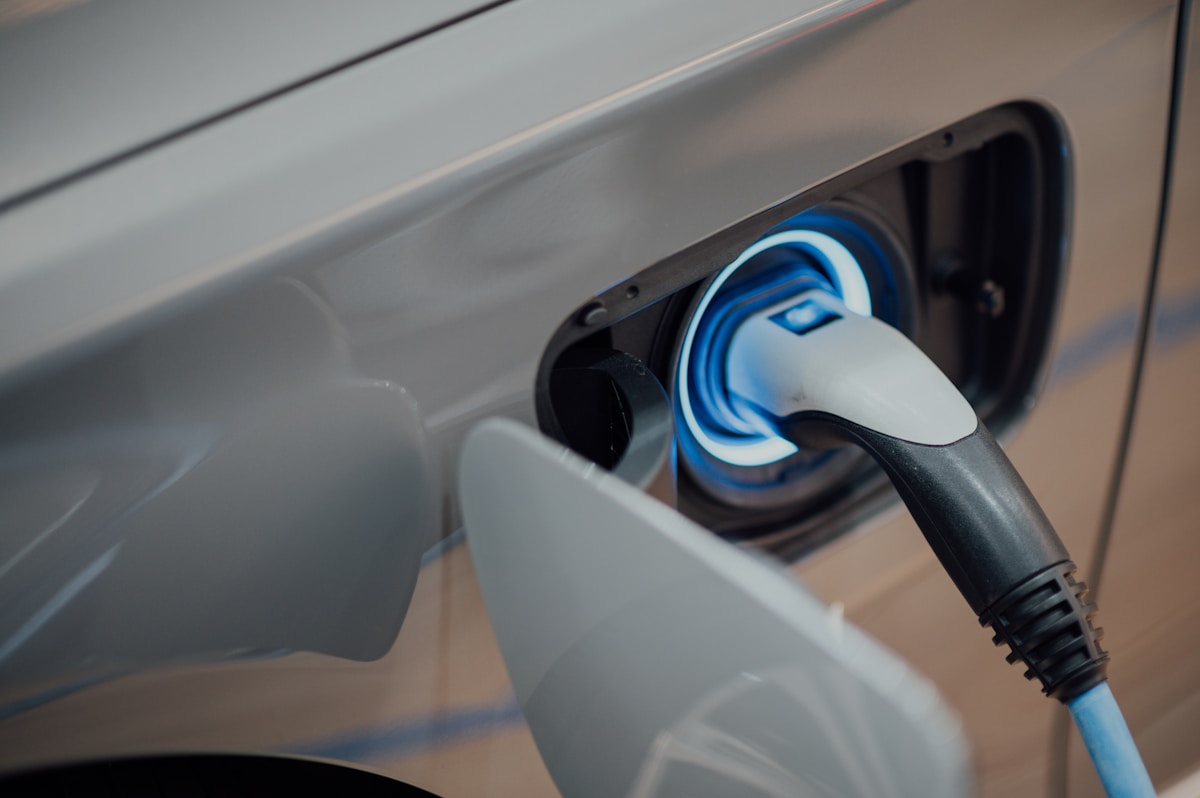
Electric vehicles are a growing share of the American fleet, and their insurance economics are fundamentally different from traditional internal combustion engine (ICE) vehicles — in ways that most EV buyers don't fully appreciate until their first premium notice arrives.
The numbers are stark. Insurify data shows that national average insurance premiums for an EV run $4,058 per year ($338/month), compared to $2,732 per year ($228/month) for gas-powered vehicles — a 49% premium. The most expensive new car to insure in 2026 is the Tesla Model Y, at $354 per month for full coverage. The Rivian R1S tops the EV-specific list at $477 per month.
The cost drivers are structural, not arbitrary. EV batteries — which can represent up to 50% of the vehicle's value — are extraordinarily expensive to repair or replace, with costs ranging from $4,000 to $20,000 depending on the model. EV repairs require specialized technicians and equipment, and the repair shop ecosystem hasn't scaled to meet demand, limiting competition and inflating labor rates. Tesla's proprietary parts sourcing, where components can only be obtained from the manufacturer with no aftermarket alternatives, compounds the problem further.
There is a meaningful nuance buried in the data, though. EVs made by traditional automakers — Ford, Volkswagen, Chevrolet — cost significantly less to insure than EVs from EV-only companies like Tesla and Rivian. The Chevrolet Equinox EV is the cheapest new EV to insure at $226 per month, versus the $477 for a Rivian R1S. If you're shopping for an EV and insurance cost is a consideration (it should be), a Ford Mustang Mach-E or a VW ID.4 will treat your wallet much more kindly than a Model Y.
One developing story worth watching: Lemonade just launched an "Autonomous Car" insurance product in partnership with Tesla, initially covering vehicles using Full Self-Driving mode in Arizona. This is the first mainstream product that directly incorporates autonomous driving telemetry into risk models. It's early, but it signals where the market is heading — a future where the insurance conversation shifts from "who is driving" to "who is driving and how much of the driving is the software doing."
The Tariff Wildcard: Why Repair Costs Could Blow Up Your Premium
There's one variable hovering over the 2026 insurance market that most consumer guides gloss over: tariffs. The effect of tariffs on auto parts and repair costs has not yet been fully realized. Insurify explicitly flagged tariffs as a "wildcard," noting that repair costs are likely to rise in 2026 and that, as of now, insurers haven't passed these costs on to consumers.
That last part — "as of now" — should give you pause. Carrier margins are currently healthy enough to absorb tariff-driven cost increases. But if parts costs spike more than expected, or if carriers' loss ratios deteriorate, the repricing cycle could restart. This is another argument for locking in competitive rates now, while the market is in a competitive phase, rather than waiting for the next shock.
It also underscores why the vehicle you drive matters enormously for insurance costs. The Toyota RAV4 and Honda CR-V are the most affordable new cars to insure in 2026, at about $214 per month for full coverage — roughly 14% below average. These vehicles use widely available parts, have extensive repair networks, and strong safety ratings. Choosing a vehicle with low insurance costs is a decision that compounds in your favor every single month you own it.
The EU AI Act and the Future of Algorithmic Pricing Transparency
I want to briefly pull the lens back to something most insurance guides completely ignore: the regulatory trajectory of AI in insurance pricing. The European Union's AI Act, which classifies credit scoring and insurance underwriting AI as "high-risk" applications, takes full effect in August 2026. This legislation requires transparency, human oversight, and anti-discrimination safeguards for algorithmic decision-making in insurance pricing.
Why should an American driver care? Because regulatory trends that start in Europe have a reliable habit of migrating across the Atlantic. There's already a growing domestic push for "explainable AI" in insurance — meaning carriers may eventually be required to tell you why their algorithm assigned you a particular risk score and premium. Several states are exploring legislation along these lines.
For now, the practical implication is this: if your premium seems inexplicably high, ask your carrier to explain the specific factors driving your rate. Under current regulations, they're required to disclose the rating factors they use, even if they're not yet required to fully explain their AI models. Push for transparency. Carriers that can't or won't explain their pricing are carriers you should leave.
The State-by-State Arbitrage: Geography as Financial Strategy
I mentioned the state-level divergence earlier, but it deserves deeper treatment because the magnitude of the differences is extraordinary. Here's how the landscape breaks down for 2026.
The Cheapest States
Vermont ($128/month), Maine ($129/month), and Wyoming ($131/month) offer the lowest full-coverage premiums in the country. Wyoming, remarkably, saw rates decrease by 30% in 2025 alone. These states share common characteristics: lower population density, fewer uninsured drivers, less litigation-driven claims inflation, and more moderate regulatory environments.
The Most Expensive States
Nevada ($335/month), Louisiana ($327/month), and Florida ($311/month) sit at the top, with all three exceeding 50% above the national average. Washington, D.C., is in a category by itself at $4,017 annually. These markets suffer from high uninsured driver rates, aggressive litigation environments, frequent severe weather events, and dense urban driving conditions.
The States in Flux
New Jersey jumped from the 15th most expensive state to the 6th in a single year, driven by new minimum coverage requirements taking effect in 2026 that include higher minimums for uninsured and underinsured motorist coverage. Michigan, despite its 2019 no-fault reform that initially reduced premiums by 18.8%, saw a 12% jump in 2025 that pushed it to the fourth most expensive state. These swing states represent the highest risk for policyholders who aren't actively monitoring their market.
If you're relocating — or if you're in a border area where you could potentially register your vehicle in a neighboring state — the insurance cost differential should factor into your decision. A move from New Jersey to Pennsylvania, or from Louisiana to Mississippi, could save you thousands annually on auto insurance alone. I'm not suggesting you commit insurance fraud by registering in a state where you don't reside. I am suggesting that if you're weighing two locations for a move, car insurance costs should be on your spreadsheet.
The Shopping Calendar: When to Compare and How Often
Conventional wisdom says to shop car insurance every six months, at renewal. That's a fine rule of thumb, but 2026's market dynamics justify a more aggressive approach. You should compare quotes under any of these conditions: your policy is coming up for renewal (obviously), you've experienced a life change (marriage, home purchase, new driver, new vehicle, address change), your credit score has improved meaningfully, a major carrier announces rate cuts in your state, your state enacts new insurance regulations, or you receive a renewal notice with an increase you didn't expect.
The data supports aggressive shopping. According to J.D. Power, 57% of customers actively sought new coverage within the past year in 2025 — a record high. That number is almost certainly higher in 2026. The carriers know this, which is why they're competing harder for new policyholders. You have leverage. Use it.
Practical Savings Strategies Ranked by Impact
After digesting everything above, here's my prioritized framework for maximizing your savings in 2026, ranked by typical dollar impact from highest to lowest.
Compare quotes from at least five carriers. Potential savings: $500–$2,000+ annually. This is the single highest-impact action you can take. The variance between carriers is so large that no other strategy comes close to matching the potential savings from simply shopping around.
Enroll in a telematics program. Potential savings: $150–$500 annually. If you're a safe, low-mileage driver, this is essentially free money. Choose a program that only discounts (never surcharges) if you want to eliminate downside risk.
Bundle your auto and home insurance. Potential savings: $200–$600 annually. Multi-policy discounts are among the most generous discounts carriers offer, and they apply across both policies.
Raise your deductibles. Potential savings: $100–$400 annually. Moving from a $500 to a $1,000 deductible on collision and comprehensive can reduce your premium meaningfully — but only do this if you have sufficient savings to cover the higher out-of-pocket cost in the event of a claim.
Improve your credit score. Potential savings: $200–$1,500+ annually, depending on your current tier and state. This is a longer-term play, but the payoff is significant. Pay down revolving debt, correct credit report errors, and maintain consistent payment histories.
Ask about every available discount. Potential savings: $100–$500 annually. Defensive driving courses, good student discounts, paperless billing, autopay, alumni associations, professional organizations, vehicle safety features — the list is long, and most policyholders claim fewer than half the discounts they're eligible for.
Review your coverage annually. Potential savings: variable. If you're driving a 12-year-old car worth $4,000, carrying $500-deductible collision coverage makes no financial sense. Drop or reduce coverage on vehicles where the premium approaches the vehicle's value.
The Bottom Line: Treat Your Insurance Premium Like an Investment
Most Americans spend more time choosing a restaurant for Saturday night than they spend optimizing an expense that costs them $2,000–$4,000 per year. That's irrational. And in a market where AI-driven pricing, telematics adoption, regulatory shifts, and carrier competition are all creating unprecedented dispersion between the best and worst deals available, that irrationality is getting more expensive every year.
The 2026 car insurance market rewards active, informed consumers and punishes passive ones. Carriers have better data than ever to identify and price-compete for low-risk customers. If you're one of those customers, make the carriers fight for your business. If you're not — if your driving record is imperfect, your credit is rebuilding, or your vehicle is expensive to insure — the strategies above still apply, but the comparison shopping becomes even more critical, because the penalty for staying with the wrong carrier is amplified.
Set a calendar reminder. Pull your current declarations page. Open three comparison sites and call one independent agent. Run the numbers with telematics enrollment priced in. Check your credit report for errors. Do the work. The 2026 insurance market is handing you an opportunity. The only question is whether you'll take it.