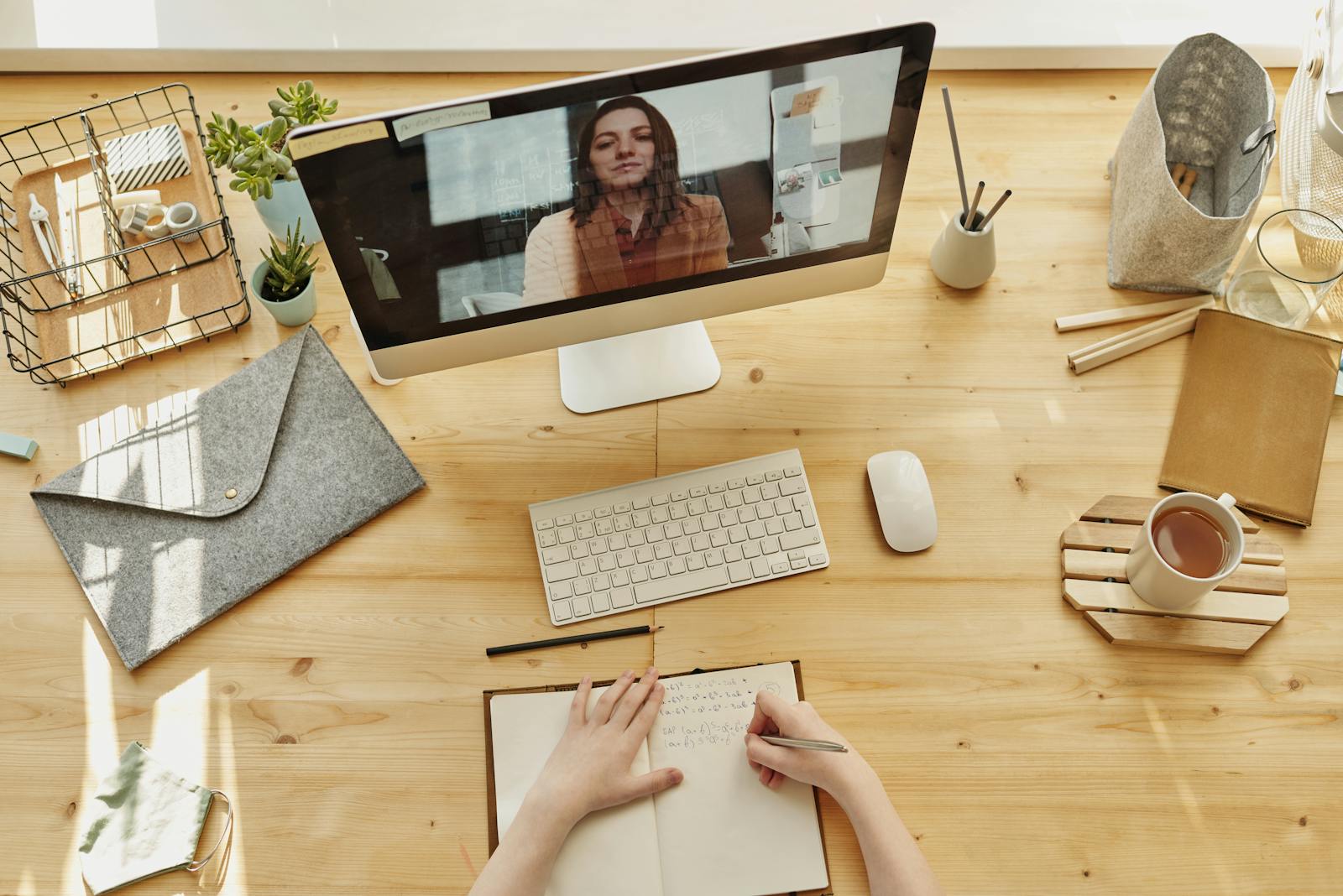
For 200 years, the global education model was built on the "Factory System": batching students by age, arranging them in rigid rows, and feeding them the exact same information at the exact same speed. It was a model designed for the Industrial Revolution, prioritizing compliance over creativity. If you were too fast, you got bored. If you were too slow, you got left behind.
In 2025, that assembly line is officially broken. We have entered the era of Hyper-Personalized Learning. Driven by Generative AI and Spatial Computing (VR/AR), the focus has shifted from "Access to Information" (which is now a free commodity) to "Optimization of Insight." This isn't just an upgrade; it is a complete operating system rewrite for how the human brain acquires skills.
1. Solving the "2 Sigma Problem" with AI
In 1984, educational psychologist Benjamin Bloom discovered a startling truth: students who received 1-on-1 tutoring performed two standard deviations (98%) better than those in a traditional classroom. He called this the "2 Sigma Problem" because affording a personal human tutor for every child on Earth was economically impossible.
Until 2025. AI Tutors have democratized this elite advantage.
Take Khan Academy's Khanmigo or similar advanced platforms. Unlike a search engine that simply regurgitates facts, modern AI acts as a Socratic tutor. It looks at your code or math problem and asks: "I see why you did that step, but what happens if 'x' is negative?" It guides the student to the answer, replicating the human tutoring experience at near-zero marginal cost. This shift is critical for understanding The Ethics of AI in developing young minds.
2. The "Algorithm of You": Adaptive Curricula
Static textbooks are dead. Modern platforms use Adaptive Learning Algorithms to build a curriculum that evolves in real-time, functioning much like a GPS for knowledge.
- The Diagnostic: The system detects that you struggle with "Quadratic Equations" but excel at "Geometry."
- The Adjustment: Instead of forcing you to repeat the chapter, it re-routes your learning path, offering 3 extra micro-lessons on quadratics using geometric visual metaphors to bridge the gap.
- The Pace: There are no semesters. You move to Level 2 only when you have mastered Level 1 with 100% proficiency.
3. Spatial Computing: Learning by "Doing"
Neuroscience tells us the brain remembers 10% of what it reads, but 75% of what it does. Virtual Reality (VR) and Augmented Reality (AR) have finally bridged this gap, moving education from "abstraction" to "immersion."
In medical schools today, students don't just look at 2D diagrams of the heart. They put on a headset, step inside a beating human heart, and repair a valve using haptic gloves that simulate the resistance of tissue.
The Economic Impact: This lowers the cost of training significantly. Engineering firms no longer need to risk millions of dollars on real jet engines for trainees; they run thousands of simulations in the "Industrial Metaverse" first.
4. The Teacher’s New Role: From "Sage" to "Guide"
Does this mean the death of the teacher? Absolutely not. But the role has inverted. When AI delivers the content, the human teacher is freed to focus on the context.
Teachers in 2025 are no longer "content delivery systems." They are Mentors of Motivation and Architects of Curiosity. Their job is to teach empathy, collaboration, and critical thinking—skills that AI cannot replicate. They identify the emotional blocks stopping a student from learning, while the AI handles the syntax of the lesson.
5. The Credential Shift: Skills > Degrees
The value of the 4-year degree is under siege. In a rapidly changing economy, a syllabus written in 2020 is obsolete by 2024. Major employers (Google, Tesla, IBM) have shifted to Skills-Based Hiring. They don't care about the diploma on your wall; they care about the "Digital Badge" in your blockchain wallet.
| Feature | Traditional Degree | Micro-Credential (2025) |
|---|---|---|
| Time to Complete | 4 Years | 3-6 Months |
| Cost Structure | $50k - $200k (Debt Heavy) | $300 - $2,000 (Pay-as-you-go) |
| Relevance | Static (Updated rarely) | Dynamic (Updated weekly) |
| ROI Speed | Delayed (Long-term) | Immediate (Job-ready) |
6. The Dark Side: The Digital Divide 2.0
We must not be naive technocrats. While AI creates "Super-Students," it threatens to leave half the world behind. The new inequality is no longer just about having internet access; it is about having AI Literacy.
Students in developed nations are learning to "co-pilot" with AI, leveraging tools discussed in AI and Investing trends where algorithms predict outcomes. Meanwhile, students in underfunded regions are banned from using it or lack the hardware to run it. This gap will create a workforce disparity far wider than the one we see today. Furthermore, the psychological toll of "Zoom Fatigue" and social isolation remains a critical hurdle that technology alone cannot solve.
7. Conclusion: The Hybrid Future
Education in 2025 is not about replacing teachers with robots. It is about augmenting human potential. The technology is here. The question is no longer "Can we learn online?" but "How fast can we unlearn the old ways?"
For the lifelong learner, this is the Golden Age. For the rigid institution, it is an existential crisis. The future belongs to those who can learn, unlearn, and relearn—powered by the silicon tutor in their pocket.