The Car Insurance Landscape in 2026: What's Actually Happening
I'll be blunt with you: if you're still paying the same car insurance rate you locked in during the pandemic-era chaos, you're almost certainly overpaying. The car insurance market in 2026 is a fundamentally different animal than the one that gouged American drivers between 2022 and 2024, and understanding these shifts is worth real money — potentially hundreds of dollars a year.
After a brutal 46% surge in premiums from 2022 to 2024, the market finally exhaled in 2025. Average annual full-coverage premiums dropped roughly 6% nationally. And heading into 2026, the forecast is something we haven't seen in years: stability. The average annual cost of full-coverage car insurance is projected to land around $2,158 — a modest 1% uptick from last year's corrected levels. For the first time in half a decade, your renewal notice might not induce a minor panic attack.
But here's where things get interesting — and where most generic advice fails you. That national average is a statistical mirage. Your actual experience depends enormously on where you live, what you drive, how you drive, and which insurer you're with. This guide exists to cut through the noise and hand you a real strategy for paying less while being smarter about coverage in 2026.

Why Premiums Rose So Aggressively — And Why They're Cooling Down
You can't game a system you don't understand, so let me explain the mechanics behind the price swings. During the pandemic, something counterintuitive happened: fewer people drove, but those who did drove more recklessly. Speeding, seatbelt non-use, and impaired driving all spiked significantly. When traffic returned to normal, those bad habits stuck around. At the same time, the cars people were driving got dramatically more expensive to repair. Advanced driver-assistance systems (ADAS) — the radar sensors, cameras, and LiDAR arrays packed into modern vehicles — are phenomenal safety features. But when they break, repairs cost a small fortune. A bumper that once cost $300 to fix now involves recalibrating a $1,500 sensor suite behind it.
Insurers hemorrhaged money. They responded the only way they knew how: aggressive rate increases to recoup losses. By 2024, the bleeding largely stopped. Loss ratios normalized, and competition re-entered the market. Several major carriers, including State Farm and Liberty Mutual, began cutting rates. The result is where we are now — a market that's recalibrated, with insurers competing again for low-risk drivers while continuing to penalize high-risk ones more heavily than ever.
The Geography Penalty: Where You Live Determines What You Pay
Your zip code is arguably the single most powerful factor in your car insurance premium, and the disparities in 2026 are staggering. If you live in Washington, D.C., you're paying an average of roughly $4,088 for full-coverage car insurance this year — nearly double the national average. Maryland, Rhode Island, New Jersey, and New York round out the most expensive markets. Meanwhile, drivers in New Hampshire are looking at an average of just $957 annually. Wyoming, North Dakota, Iowa, and Idaho all hover well below $1,300.
What drives these differences? Traffic density, litigation culture, extreme weather exposure, vehicle theft rates, and state-specific regulations all play their roles. States with aggressive plaintiff attorneys and a history of large jury verdicts — sometimes called "nuclear verdicts" in the insurance industry — tend to have higher liability costs baked into every policy. States with minimal congestion and low crime see the opposite effect.
The actionable takeaway? If you recently moved, especially across state lines, re-shop your insurance immediately. Don't assume your current carrier has the best rate in your new market. State-level dynamics mean the cheapest insurer in Ohio might be the most expensive in Florida.
States Where Rates Are Dropping in 2026
The good news: roughly 39 states saw premium decreases in 2025, and many of those savings are carrying into 2026. States like Vermont, Minnesota, Mississippi, Wyoming, Iowa, and Arkansas posted some of the most dramatic cuts — with Wyoming, Iowa, and Arkansas residents seeing decreases exceeding 20%. If you live in one of these states and haven't re-shopped your policy recently, you're likely paying a "loyalty penalty" — sticking with your insurer's outdated pricing while competitors are offering better deals.
States Where You Should Brace Yourself
Conversely, drivers in Oregon, Maryland, and Utah are projected to see rate increases of 9% to 21% across the first two quarters of 2026. If you're in one of these markets, your best defense is proactive shopping. Records show that the percentage of drivers who actively shopped for insurance hit a record 57% in 2025 — and those shoppers consistently found better rates. The loyalty-penalty effect is real: insurers often reserve their best pricing for new customers.
What You Drive Matters More Than You Think
The car sitting in your driveway is, in many ways, a proxy for what your insurer thinks it'll cost to fix or replace it. And in 2026, the gap between the cheapest and most expensive vehicles to insure is wider than ever.
The Toyota RAV4 and Honda CR-V stand out as the most affordable new vehicles to insure, with full-coverage premiums averaging around $214 per month — about 14% below the average across popular models. These compact crossovers benefit from reasonable repair costs, strong safety records, and parts that are widely available and inexpensively sourced.
On the other end of the spectrum, the Tesla Model Y carries the highest insurance cost among popular new cars at roughly $354 per month for full coverage. Tesla owners face a unique double hit: the vehicles are expensive to repair due to proprietary parts and specialized repair processes, and Teslas have been associated with higher claim severity. The Model X and Model S saw insurance cost increases of 7% and 9%, respectively, even as rates for 48 other popular models fell.
The Electric Vehicle Insurance Gap Is Narrowing — Slowly
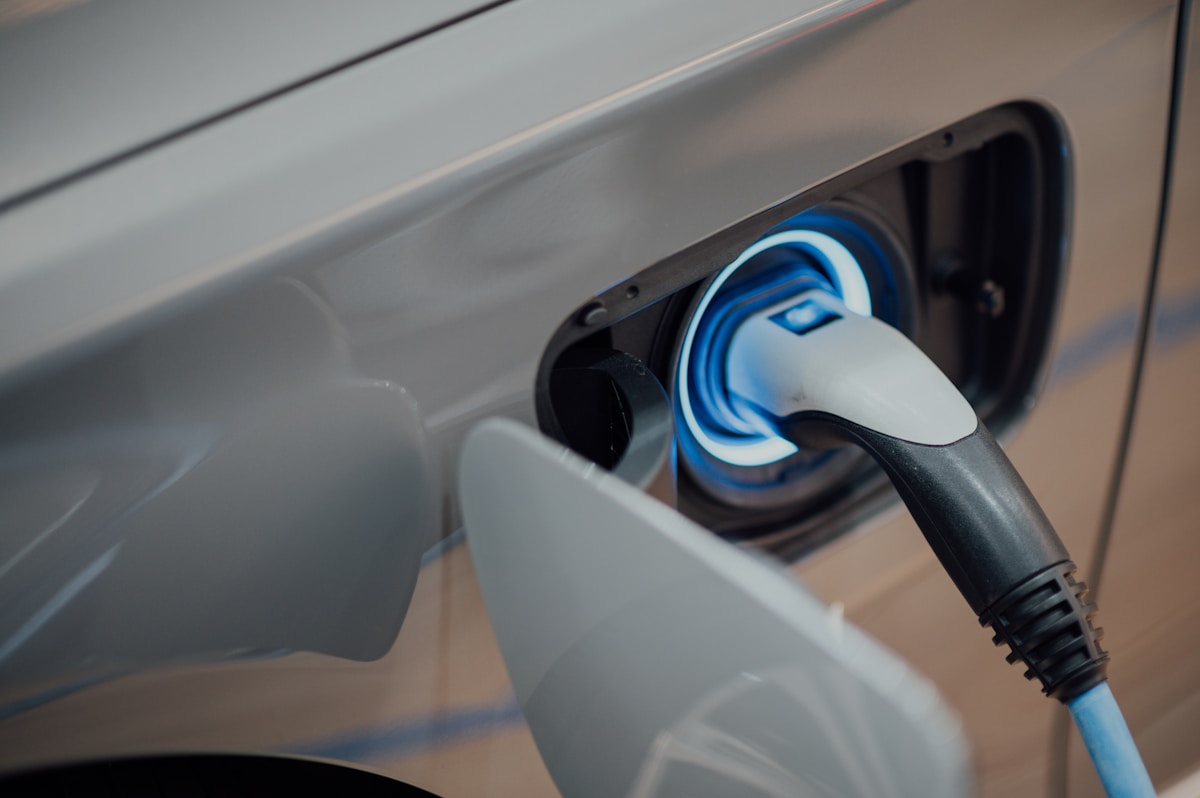
If you drive an EV, there's a silver lining. The insurance cost gap between electric and gas-powered vehicles is shrinking. In 2025, EVs cost about 23% more to insure than their gas counterparts. In 2026, that gap has tightened to roughly 18%. Some models are approaching parity — the electric Ford F-150 Lightning, for example, costs just 4% more to insure than the gas-powered F-150. As repair networks mature and EV-specific parts become more available, expect this trend to continue.
Telematics and Usage-Based Insurance: Your Most Powerful (and Most Misunderstood) Savings Tool
Here's where I need to be honest with you in a way most insurance guides aren't. Telematics — those apps and plug-in devices that track your driving behavior — represent the single biggest potential savings lever available to you in 2026. They also come with genuine trade-offs that most articles gloss over.
The pitch from insurers is seductive: let them monitor your braking, acceleration, speed, mileage, and time-of-day driving patterns, and they'll reward you with personalized pricing. The advertised maximum discounts are eye-catching — Allstate and Nationwide offer up to 40%, State Farm and Liberty Mutual up to 30%, GEICO up to 25%. As of 2024, over 21 million U.S. policyholders were sharing telematics data with their insurers, a number that's grown at a 28% compound annual rate since 2018.
But here's what the marketing doesn't tell you: most drivers enrolled in telematics programs don't actually save money. A Maryland state report found that less than a third of enrolled drivers saw their premiums decrease. Nearly a quarter saw their premiums go up. And 45% experienced no change at all. Those maximum discounts? They're the ceiling for near-perfect driving behavior — not the norm.
When Telematics Genuinely Makes Sense
Despite the caveats, telematics can be a powerful tool if you fit the right profile. You're an ideal candidate if you drive fewer than 7,500 miles annually, avoid night driving, have smooth and consistent braking habits, and don't speed. If you work from home, are retired, or rely on public transit for commuting, pay-per-mile programs like Nationwide SmartMiles can slash your costs dramatically since you're paying primarily for the miles you actually drive.
The key is to pick your program strategically. State Farm's Drive Safe & Save is one of the most consumer-friendly options because it won't raise your rate based on the data — your discount can shrink, but your base rate is protected. Progressive's Snapshot and Allstate's Drivewise, on the other hand, can penalize risky driving patterns. If you're not confident your driving habits will score well, lean toward programs that offer only upside.
The Privacy Trade-Off Nobody Wants to Talk About
I'd be doing you a disservice if I didn't address the elephant in the car: data privacy. When you enroll in a telematics program, you're handing over granular data about when, where, and how you drive. Some programs track phone use while driving, your altitude, how often you use turn signals, and even your car's fuel level. Much of this data isn't collected by insurers directly — it's gathered by third-party companies, often with minimal transparency about how your information is stored, shared, or sold.
Most states have no meaningful restrictions on what insurers can do with telematics data. They could use it during claims disputes, for marketing other products, or sell de-identified versions to data brokers. Before you enroll, ask your insurer directly: What data do you collect? Can it be used against me in a claim? Will it be shared with third parties? What happens to my data if I opt out?
My take: if you're a genuinely safe, low-mileage driver, the savings probably justify the trade-off. If you're average or below-average, the discount may not be worth the surveillance. And for everyone, I recommend asking your insurer about their data policies before signing up — not after.
The 2026 Savings Playbook: Concrete Steps That Actually Work
Enough theory. Here's a prioritized list of actions, ranked by how much money they're likely to save you, that you should work through this year.
1. Shop Around — Seriously, Actually Do It This Time
I know you've heard this before. I know it feels tedious. But rate competition in 2026 is the fiercest it's been since before the pandemic. Major carriers are fighting for clean-record drivers, and the price spread between the cheapest and most expensive quotes for the same driver profile can easily exceed $1,000 per year. Compare at least four providers, and use both online comparison tools and direct carrier quotes. The 15 minutes you spend could yield a four-figure annual saving.
2. Bundle Your Policies
If you have both auto and homeowners or renters insurance, bundling them with a single carrier almost always triggers a multi-policy discount. These typically range from 5% to 25% depending on the carrier. Even if the auto quote from a bundling carrier isn't the absolute cheapest, the combined savings across both policies often make it the better deal.
3. Reassess Your Coverage and Deductibles
If your car is paid off and its value has dropped below $10,000, ask yourself whether comprehensive and collision coverage still makes financial sense. You're paying to insure against a loss that's relatively small compared to the cumulative premiums. At minimum, consider raising your deductible from $500 to $1,000 — this alone typically reduces your premium by 8% to 15%. Just make sure you have the deductible amount accessible in savings.
4. Clean Up Your Credit
In most states, your credit-based insurance score is one of the top factors in your premium — and the correlation is strong. Drivers with poor credit pay dramatically more than those with good credit, sometimes double. Paying down revolving balances, correcting errors on your credit report, and maintaining consistent payment history can meaningfully reduce your insurance costs at renewal.
5. Ask About Every Possible Discount
Insurers offer a dizzying array of discounts that they don't always advertise or auto-apply. These include good student discounts, military and veteran discounts, defensive driving course completions, low-mileage discounts, paperless billing, autopay, professional organization memberships, and anti-theft device credits. When you call for a quote, explicitly ask: "What discounts am I not currently receiving that I might qualify for?" You'd be surprised how often this question uncovers savings.
6. Review Your Mileage Reporting
If your driving habits have changed — maybe you started working remotely or moved closer to your office — update your insurer. Many people are still rated for a 30-mile daily commute they no longer make. Accurate mileage reporting can lower your rate, and for very low-mileage drivers, switching to a pay-per-mile program can cut costs in half.
High-Risk Drivers: What You Need to Know in 2026
If you have a DUI, accidents on your record, a lapse in coverage, or you're insuring a teen driver, I won't sugarcoat it: 2026 is not going to feel like a relief. The market correction that's benefiting low-risk drivers is coming at the direct expense of high-risk ones. Insurers are shifting from broad, everyone-pays-more rate hikes to targeted, risk-based pricing. The result is a widening gap.
Premiums for drivers with a DUI jumped roughly 35% in the second half of 2025. Teen driver rates climbed approximately 17%. Drivers with poor credit or lapsed coverage are seeing similar increases. This isn't a temporary adjustment — it reflects a structural shift in how insurers are pricing risk.
If you're in this category, your strategies need to be more aggressive. First, shop even more aggressively than a clean-record driver — rate variations are even wider in the high-risk market. Second, consider a telematics program specifically designed not to penalize risky driving (like State Farm's Drive Safe & Save), which lets you build a good-behavior track record without additional downside. Third, focus on getting incidents off your record as quickly as possible — in many states, accidents fall off after three to five years, and completing a defensive driving course can accelerate the process.
The Rise of Autonomous and Semi-Autonomous Vehicle Insurance
While fully self-driving cars aren't mainstream in 2026, the conversation around insuring them is gaining momentum. Specialty insurance products are beginning to emerge that split liability between the vehicle owner and the manufacturer — acknowledging that when software is driving, the calculus of "who's at fault" fundamentally changes.
For most drivers, this won't affect your policy this year. But it's worth paying attention to. If you drive a vehicle with Level 2 or Level 3 autonomous features — adaptive cruise control, lane-keeping assist, automatic emergency braking — make sure your insurer knows. Some carriers offer discounts for ADAS-equipped vehicles (since they reduce accident frequency), while others charge more (since repairs involving these systems are expensive). The net effect on your premium depends on the specific vehicle and carrier.
The Tariff Factor: Why Your Next Car Could Cost More to Insure
An underreported factor for 2026 is the effect of ongoing import tariffs on auto parts and vehicles. Tariffs on cars and materials have increased repair costs for vehicles that rely on imported components, and those higher repair costs flow directly into insurance premiums. If you're buying a new car this year, factor in the insurance implications — not just the sticker price. Domestically manufactured vehicles with widely available parts tend to carry lower premiums than imported luxury or specialty models.
Your Annual Insurance Audit: A 30-Minute Routine That Pays for Itself
I want to leave you with a practical ritual. Once a year — ideally 30 to 45 days before your renewal date — sit down and run through this checklist:
Review your declarations page. Confirm your listed vehicles, drivers, mileage, and coverage limits are accurate. Errors here cost you money in both directions — overpaying for coverage you don't need, or being underinsured when you need protection.
Get three to four competing quotes. Use independent agents who can quote across multiple carriers, not just captive agents tied to one company. Online comparison tools are a good starting point, but direct carrier quotes sometimes reveal pricing that aggregators miss.
Evaluate your deductibles. Can you comfortably absorb a higher out-of-pocket cost in exchange for lower monthly premiums? If your emergency fund covers it, a higher deductible is almost always the smarter financial move.
Check for new discounts. Life changes — finishing school, turning 25, installing a dashcam, moving to a less congested area — can trigger discounts you're not currently receiving.
Assess telematics. If you haven't tried a usage-based program and you fit the low-risk profile, this is the year to test one. Many programs offer enrollment discounts of 5% to 10% just for signing up, before any driving data is collected.
This 30-minute exercise, repeated annually, is conservatively worth $200 to $800 per year for most households. Over a decade of driving, that's a meaningful amount of money redirected from insurance company coffers to your bank account.
The Bottom Line
Car insurance in 2026 is, for the first time in years, a buyer's market — if you're willing to be proactive. The days of passively accepting whatever renewal notice arrives in the mail should be over. Carriers are competing, rates are stabilizing, and the tools available to you — from telematics to online comparison shopping — are more sophisticated than ever. But these tools only work if you use them.
Your car insurance premium isn't a fixed cost of life. It's a negotiation you have the power to influence. Drive smart, shop smart, and stop leaving money on the table.